

Approximately one in every six adults globally is affected by infertility. This is roughly 17.5% worldwide. The World Health Organization postulates that the majority of the population undergoes fertility treatment to build their families. The advent of IVF and egg freezing has provided new hope for those with fertility problems, but also new questions
The WHO defines infertility as a failure to achieve pregnancy after 12 months of regular unprotected sexual intercourse. Infertility causes can be from the male, the female, both, or other unexplained factors. Causes associated with women can include diseases affecting the fallopian tubes, ovulation issues, abnormal uterus, and ovarian dysfunctions. Men are also affected due to the low sperm count, motility, or morphology.
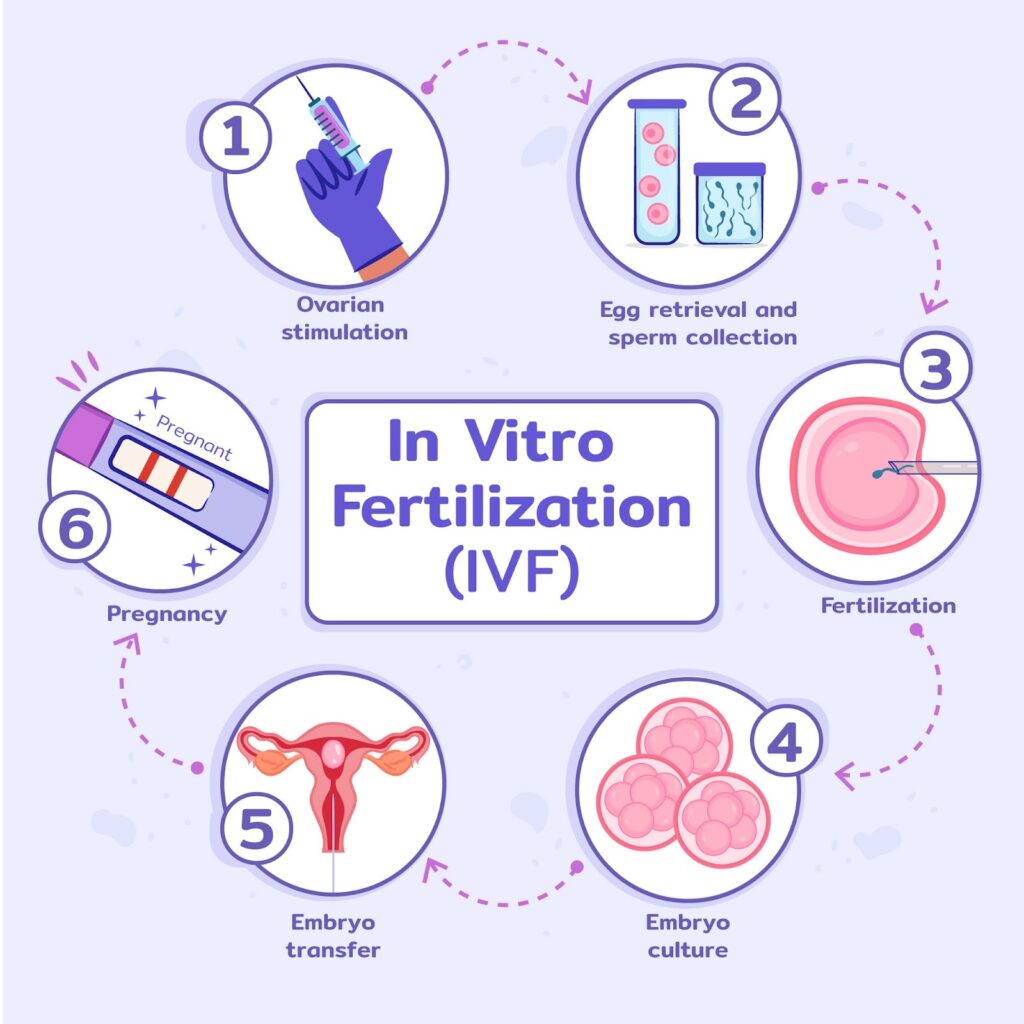
There are developments of new treatment modalities like Assisted Reproductive Technology (ART), where the egg, or the embryo, is manipulated the the lab environment. According to the Centers for Disease Control, ART is defined by excluding sperm-only manipulation, like the IUF. ART also includes cryopreservation of the egg or embryos.
Advances in IVF in 2025
IVF fertility treatment 2025 is rapidly evolving with the integration of artificial intelligence and multi-modality data interaction. Recent literature reviews have demonstrated a high level of accuracy through the combination of static images, time-lapse videos, and structured clinical data in utilizing multi-modal AI for embryo grading and pregnancy prediction. This technology has reduced the manual assessment of the embryo, which might have human errors (1).
There is a blueprint that describes an accuracy of 99.5% optimization that predicts the IVF success rate in 2025 for live birth. Although this model has a high prediction rate, the performance must still be further validated in the real-world setting for it to be adopted (2).
In a study examining the combination of AI and medical imaging in refining hormonal dosage, triggering timing, and retrieval of oocyte cells, the stimulation phase is promising. These advances in IVF 2025 are promising. This can help us tailor individual cycles by preventing under-stimulation or over-stimulation.
Genetic factors also play a vital role in fertility. A systematic review has outlined that tested normal chromosomal embryos have far higher implantation rates than those not tested. There is an advancement in genetic testing with the emergence of non-invasive preimplantation genetic testing (niPGT) through cell-free DNA in the embryo, hence reducing the need for the biopsy (3).
In 2025, there will be automation of the IVF by the use of AI, microfluidics, and closed system human error, strict procedures, and subsequent less expense. The IVF protocols have simplified and minimized stimulation, hence reducing the cost of treatment for the patients (4).
Embryos are continuously monitored by capturing minute developmental transformations that could have been missed through the use of time-lapse imaging. The AI can enhance the analysis of the growth sequences, not just isolated steps.
All this progress in integrating AI in managing infertility challenges aims to reduce physical, emotional, and financial burdens.
Progress in Egg Freezing
Women are now able to preserve their fertility through oocyte cryopreservation or egg freezing, for later use. Advancements in modern technology can help in stimulating the ovaries, retrieving the eggs, rapidly freezing (vitrifying), and storing them until thawing.
There is growth in demand. Women can now decide to freeze their eggs early enough with an understanding of growth. It is recommended to freeze the oocyte at a younger age due to its higher quality. The advancement in technology and protocols in 2025 has improved the survival rate post-thawing by reducing the damage from ice crystals. Machine automation has standardized the cooling rate and reduced human errors (5).
Age is still a critical component in egg freezing. An early egg frozen before the age of 30 years has a higher chance of survival. Other important factors include handling protocols, thawing techniques, and the ovary. Also, studies show that many of the women do not go back to use their donated egg; hence, utilization is lower than expected.
Egg freezing in 2025 now offers more reliability than before. But it is a form of insurance, not a guarantee.
Although there is no form of guarantee, egg freezing is a more reliable form of fertility management than before (6).
Ethical, Emotional, and Access Issues
With the advancement of technology, a lot of ethical questions are on the rise. The concerns revolve around who should decide the specific embryo to be transferred. Should the AI make the final determinations? There are concerns about the transparency and oversight that patients find not to be clear.
There exists an emotional burden. Research has shown that patients find it costly, with uncertainty about the probable outcomes, complex decision-making, and pressure from society. The recommendation is a provision of counseling, having realistic expectations, and mental health awareness support.
WHO indicates a trend where we have very low access to fertility care. This challenge has had an impact on access and equity. Also, universal health coverage does not cover fertility care. The treatment of infertility remains unequal even in high-income countries (7).
In the US, the cost of IVF is out of reach for many, with an estimated cost of $12,000-$25,000. The White House, through an executive order, asked for recommendations to reduce the cost of IVF and expand access. They recommend expansion of coverage by making IVF nationally available.
CDC has established an annual publication showing the trends in the success rate. Also, the 2025 Success Rate platform shows both the national and clinic-level statistics. Informed choices are being made through the analysis of these statistics from the CDC.
There is a requirement for informed consent that discloses a full array of information, ranging from methods, risks, and known or unknown concerns. Clinics should not just sell the service; they must look at ethical considerations (8).
Also read: Mental Health Awareness: Breaking the Stigma
Role of Age, Lifestyle, and Implantation Biology
For fertilization to be successful, age is a dominant factor. Over time, the ovarian reserve and the quality of the oocyte will decline. Aging is rarely overcome by modern technology.
The gamete quality can also be affected by lifestyle factors, which are key determinants in the outcomes. These factors include nutrition, sleep quality, exposure to toxins, stress and anxiety, and metabolic factors.
A recent meta-analysis has shown that implantation failures are emphasized because euploid embryos have a much higher success rate. Other factors that may play a role in implantation include extra-embryonic like the uterine and immunologic.
Furthermore, to separate the impact of ART itself, a recent study compared spontaneous pregnancy following unsuccessful ART. When confounders are taken into account, it was discovered that ART has no significant negative effects on newborn health and only modestly reduces the probability of cesarean delivery. This implies that even if there are certain procedural hazards associated with ART procedures, results are frequently safe when care is provided.
Challenges & Risks
There are several risks associated with ART: multiple gestation, ovarian hyperstimulation syndrome (OHSS), complications associated with procedures, and long-term results that should be monitored.
Statistics also show unproven persistent additional treatment: endometrial scratching and unproven supplementation. A UK study shows that fertility patients have at least one additional treatment without a clear reason. The recommendation is to provide clear information, enforce oversight regulation, and provide patient education.
There are biases associated with AI models. There is less generalization to the diverse population due to the fact that the AI data are trained from a high-resource center. There are challenges associated with transparency and external validation.
There is a need for privacy and data security issues to be centrally located. Important patient information, like the genetic data, radiological imaging, and clinical data. The issues related to the institution must be guarded for confidentiality and ethical uses (9).
Looking Ahead: Future Frontiers
There are attempts for the development of lab-grown gametes that will help those not able to reproduce due to a lack of functional ovaries to have options that generate egg germ cells
There are explorations for transplanting the uterus, biomodification of uterine scaffolds, and generation of an artificial womb.
Further integration of multi-omic data (genome, transcriptome, proteome, metabolome) may allow truly personalized protocols.
Further protocols are being developed to personalize and integrate multi-omi data, like genome, transcription, proteome, and metabolome.
The AI is now being used to provide learning by offering a way to build trust and ensure privacy across different centers. The most common AI is the Explainable AI (XAI).
There are global initiatives that are likely to advocate for the treatment of fertility as part of the health coverage in most countries.
Safety, equity, and patient welfare must continue to be the main priorities as technology and legislation change.
Frequently Asked Questions
Q1. When is the best age to freeze my eggs?
It’s recommended to freeze eggs before age 35. Younger eggs have a better chance of survival during thawing and leading to pregnancy.
Q2. How safe are the new AI systems used in IVF labs?
AI helps the selection of embryos and predicts outcomes. Doctors use AI for decision-making. Clinics are often reviewed and cleared according to their adherence to the ethics requirements. They must explain the procedure and the results.
Q3. Can I use my frozen eggs years later?
Frozen eggs can remain viable for 10–20 years if well preserved. There is no difference between a newly stored frozen egg and a long-term frozen egg because studies have shown similar outcomes.
Summary
Fertility care is still not universally accessible in 2025. There is a transformation in IVF and egg freezing the the use of AI, imaging, automation, and genetics. The main challenges for the majority are accessibility, financial burden, ethical dilemmas, and lack of transparency. When advances are in line with accountability, transparent communication, and fair reach, patients benefit the most.
References
1. Ouyang X, Wei J. Multi-Modal Artificial Intelligence of Embryo Grading and Pregnancy Prediction in Assisted Reproductive Technology: A Review [Internet]. arXiv; 2025 [cited 2025 Oct 16]. Available from: http://arxiv.org/abs/2505.20306
2. Borji A, Haick H, Pohn B, Graf A, Zakall J, Islam SMRS, et al. An Integrated Optimization and Deep Learning Pipeline for Predicting Live Birth Success in IVF Using Feature Optimization and Transformer-Based Models [Internet]. arXiv; 2024 [cited 2025 Oct 16]. Available from: http://arxiv.org/abs/2412.19696
3. Bulletti FM, Sciorio R, Conforti A, De Luca R, Bulletti C, Palagiano A, et al. Causes of embryo implantation failure: A systematic review and metaanalysis of procedures to increase embryo implantation potential. Front Endocrinol. 2024;15:1429193.
4. Assisted Reproductive Technology: A Ray of Hope for Infertility – PMC [Internet]. [cited 2025 Oct 16]. Available from: https://pmc.ncbi.nlm.nih.gov/articles/PMC12163768/?utm_source
5. Latest Innovations in Fertility Treatments for 2025 [Internet]. 2025 [cited 2025 Oct 16]. Available from: https://adorefertility.com/latest-advances-in-fertility-treatments-for-2025/
6. Health care experiences of individuals accessing or undergoing in vitro fertilization (IVF) in the U.S.: a narrative review of qualitative studies – PMC [Internet]. [cited 2025 Oct 16]. Available from: https://pmc.ncbi.nlm.nih.gov/articles/PMC11865040/?utm_source=chatgpt.com
7. Infertility [Internet]. [cited 2025 Oct 16]. Available from: https://www.who.int/news-room/fact-sheets/detail/infertility
8. House TW. The White House. 2025 [cited 2025 Oct 16]. Expanding Access to In Vitro Fertilization. Available from: https://www.whitehouse.gov/presidential-actions/2025/02/expanding-access-to-in-vitro-fertilization/
9. Perinatal Risks Associated With Assisted Reproductive Technology [Internet]. [cited 2025 Oct 16]. Available from: https://www.acog.org/clinical/clinical-guidance/committee-opinion/articles/2016/09/perinatal-risks-associated-with-assisted-reproductive-technology